The Cabinet at M+ Museum
Industry
Arts & Culture, Museum, Interactive Installation
Client
M+ Museum
Scope
Creative Direction Experience Design Interaction Design Motion Studies Prototyping

Shaping an Interactive, Collaborative Interpretation Game
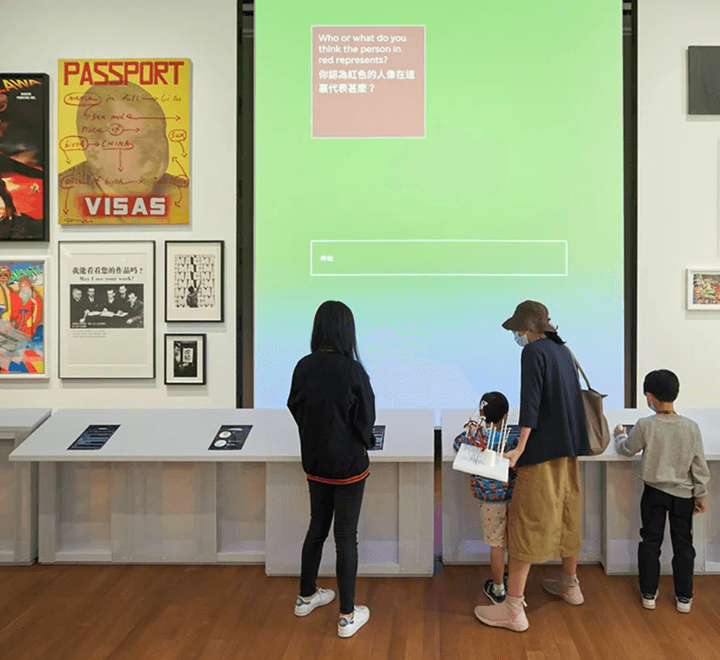
The Cabinet is a permanent interactive installation at M+, designed to make visual culture more accessible through play, participation, and shared exploration. At the core of the project was a clear intention: to empower every visitor to interpret art in their own way. Rather than positioning interpretation as something reserved for experts, the experience was designed to feel open, intuitive, and inviting. As lead creative, I focused on shaping a multiplayer, game-like system that encourages visitors to engage with artworks through interaction. A series of interactive games was developed to prompt interpretation, inviting people to respond, explore, and form their own perspectives in a way that feels playful rather than performative. The experience is built around collaboration. Visitors gather around the installation, interacting together, influencing each other’s choices, and creating moments of shared discovery. Through workshops, prototyping, and iterative testing, we developed a system where interaction, motion, and visual language work together to support this dynamic, making the experience feel alive, responsive, and accessible to a wide audience.




A Shared Space for Play, Interpretation, and Discovery
The result is an interactive experience that transforms how visitors engage with art by shifting the focus from observation to participation. Through game-like interactions, visitors are invited to interpret artworks together, responding instinctively rather than searching for the “right” answer. The experience creates a space where curiosity feels natural, and interpretation becomes both personal and shared. By designing for multiple users at once, the installation encourages conversation, collaboration, and collective exploration. Visitors influence each other’s perspectives, turning the act of viewing into something active and social. The system supports this without getting in the way. Interaction, motion, and visual structure are designed to feel intuitive and responsive, keeping the experience accessible while still offering depth. The result is an environment where people feel comfortable engaging with art on their own terms, making the experience both more inclusive and more memorable.